
Winter cover crops promote soil health in UK arable systems
The UK EBA
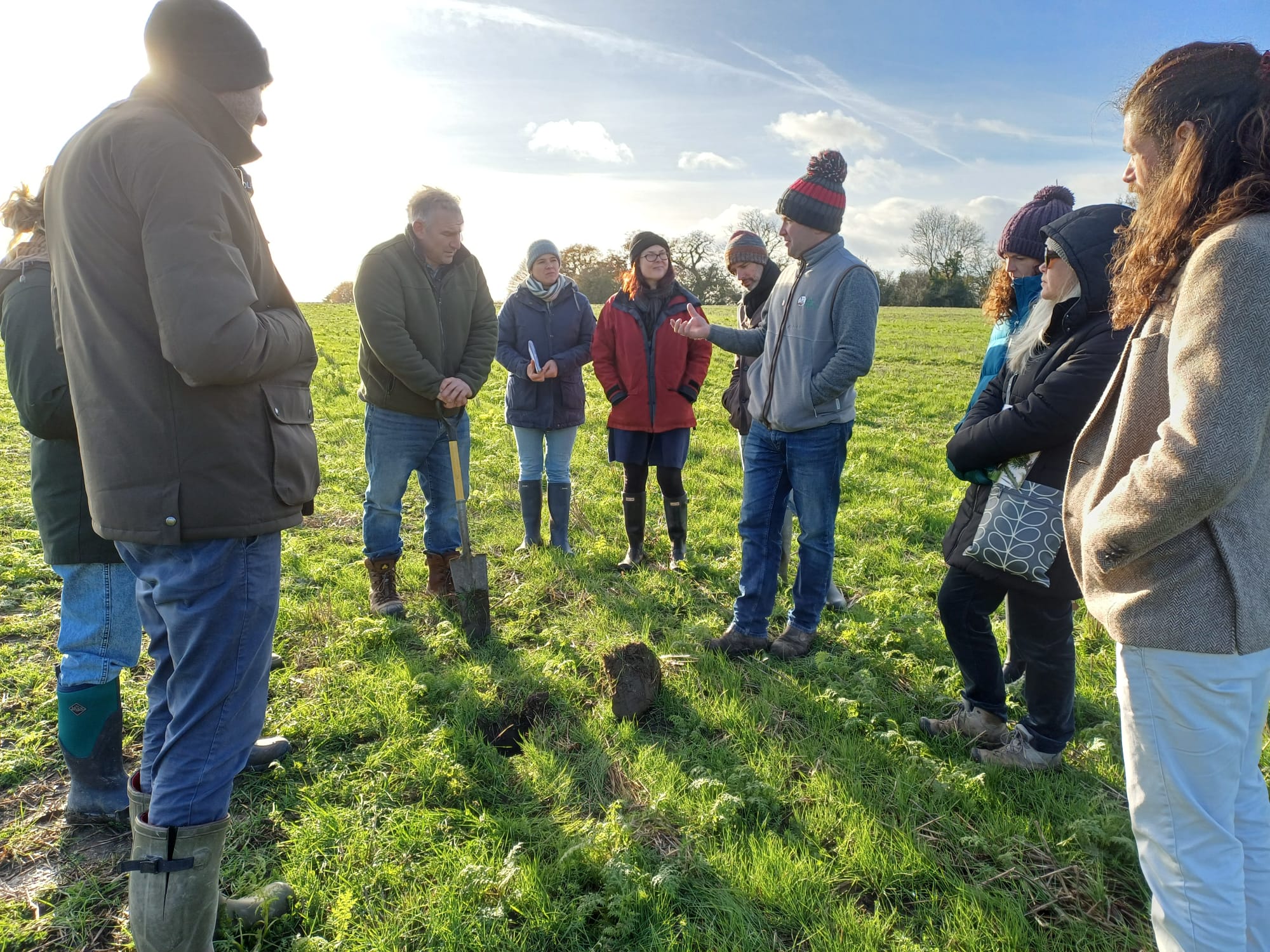
Our research question was co-designed by 16 arable farmers and several researchers. Our aim was to test a farming intervention that could promote production and biodiversity at the same time, and after eight months of meetings and discussions we decided to run a cover crop trial. In particular, we aimed to test the environmental and production impacts of different cover crop mixes, and the impact of cover crop frost tolerance specifically. In the UK, cover crops are most commonly removed by spraying herbicide, and we wanted to test the impacts of mixes that may need less herbicide if they have partially died off in the frost and therefore have reduced plant biomass. This could have environmental and financial benefits due to reduced application rates. We hypothesised that frost sensitive mixes might also improve soil health by having decomposing above and belowground matter throughout the winter.
Our approach
This trial was conducted on eleven farms across Southern England from 2021-2023. We collected data at four times, using a robust experimental design that includes pre-treatment and post-treatment measurements. We tested four cover crop treatments:
- Frost sensitive: A four-species mix of frost-sensitive cover crops including Early English Vetch, Bersem Clover, Black Oats, and Buckwheat.
- Frost hardy: A four-species mix of frost-hardy cover crops including Winter Vetch, Crimson Clover, Protector Rye, and Linseed.
- Mix: An eight-species mix using a reduced application rate of each of the species above.
- Control: No cover crops were planted.
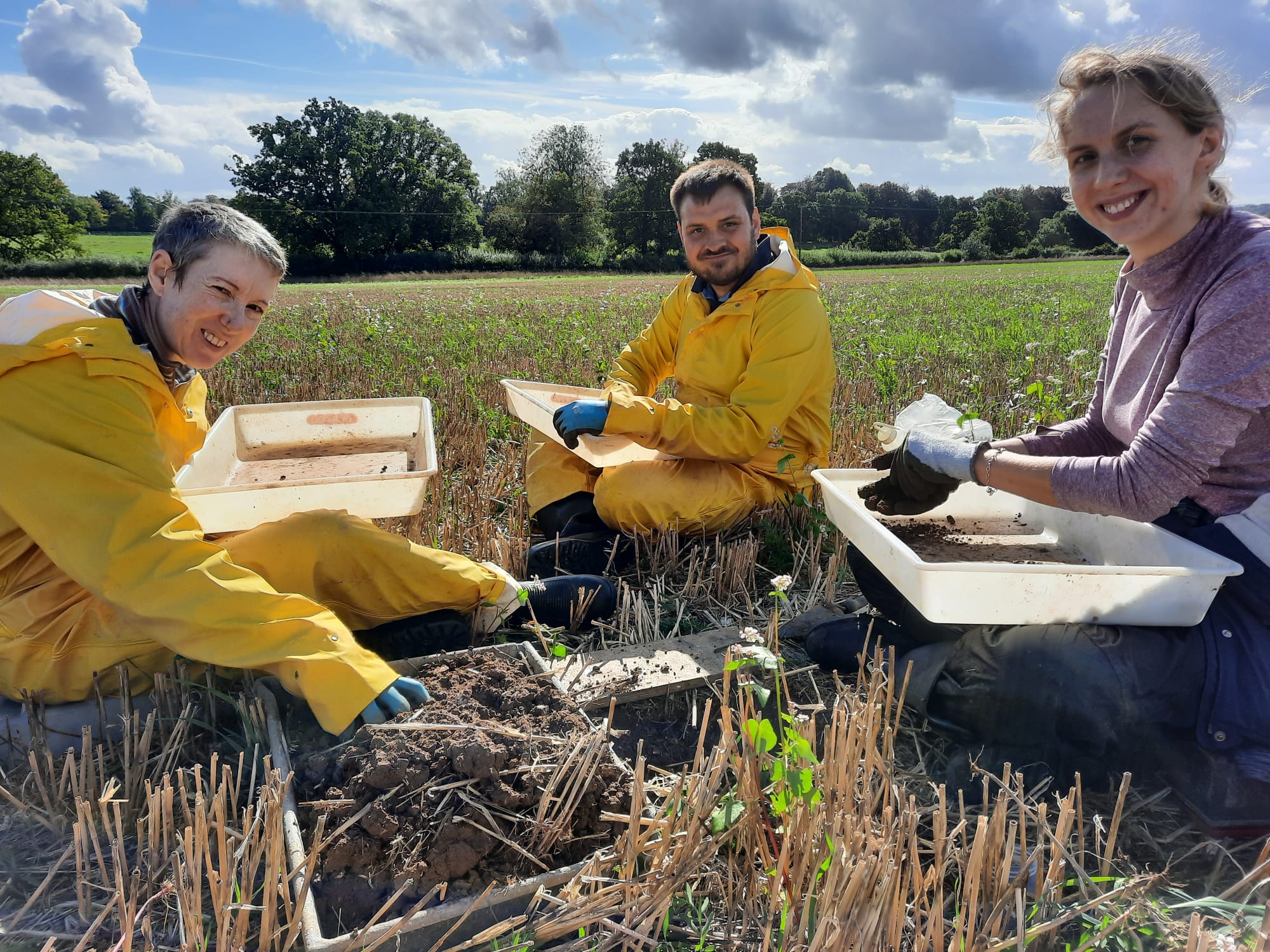
We assessed the impact of these mixes on biodiversity (including plants, spiders, beetles and earthworms), soil health (including decomposition, structure and organic matter), and production (including cereal yield and thousand grain weight, and cover crop biomass and nitrogen content).
What we found
We found a significant impact of the cover crop treatments on plants, spiders, earthworms and decomposition. Whilst there was no significant impact on the other indicators (beetles, soil structure, organic matter, and production), this does not mean that cover cropping would not benefit these indicators over a longer period of time. In fact, several studies have shown that the benefits of cover cropping increase after multiple years of use.
The winter sensitive mix died off through the winter, which increased bare ground cover, and the hardy and mix treatments also had 44% more dry plant biomass and 15% more N in the cover crops per area.
In terms of their impact on biodiversity and soil health, the differences between the treatments were smaller, with fewer spiders and slower decomposition rates in the winter sensitive mix compared to the other two mixes. Overall, these results are promising for using winter sensitive mixes to reduce herbicide rates for cover crop removal whilst maintaining the ecological benefits of cover cropping.
What are the implications
Our findings show that cover crops can deliver multiple environmental benefits after just one season, with likely greater gains over time. Increased spider abundance can support natural pest control, while more plant cover and earthworms improve soil health and resilience to climate extremes. The study also underscores the value of involving farmers in research design. Because the trial addressed real concerns and interests, some participants have already changed their practices in response to the findings.

