
Comparing Agroecological and Conventional Farming Practices in Switzerland
The Swiss EBA
The Showcase project (Horizon 2020) aims to demonstrate nature-based solutions for sustainable agriculture across Europe by creating Experimental Biodiversity Areas (EBAs). These EBAs foster collaboration between farmers and researchers. In Switzerland, the EBAs are part of the PestiRed project, which seeks to reduce pesticide use by at least 75% while maintaining crop productivity (< 10% yield losses) through agroecological interventions such as wildflower strips, undersowing, and mechanical weeding.
Our approach
This case study examines the effects of agroecological practices compared to conventional farming in Swiss agricultural fields.
In this study, agroecological fields implemented several key interventions:
- Reduced pesticide use. No pesticides (fungicides, herbicides, or insecticides) were applied in agroecological fields. Instead, farmers relied on mechanical weeding and soil management to control weeds and pests.
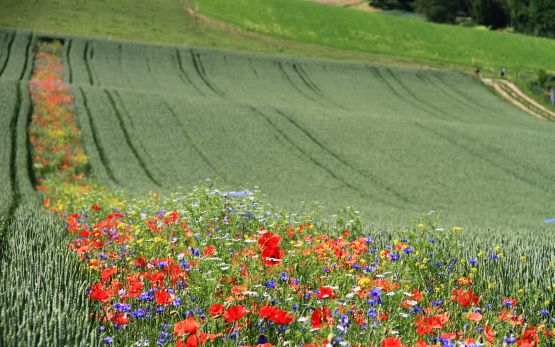
- Wildflower strips. Introduced at field margins, these strips promoted plant and arthropod biodiversity, providing habitat for beneficial species like spiders and bees.
- Mechanical interventions. Agroecological fields frequently used mechanical methods, including adapted crop varieties and undersowing techniques, to manage weeds and maintain soil health.
By contrast, conventional fields used chemical inputs, including pesticides and nitrogen fertilizers, to maintain productivity.
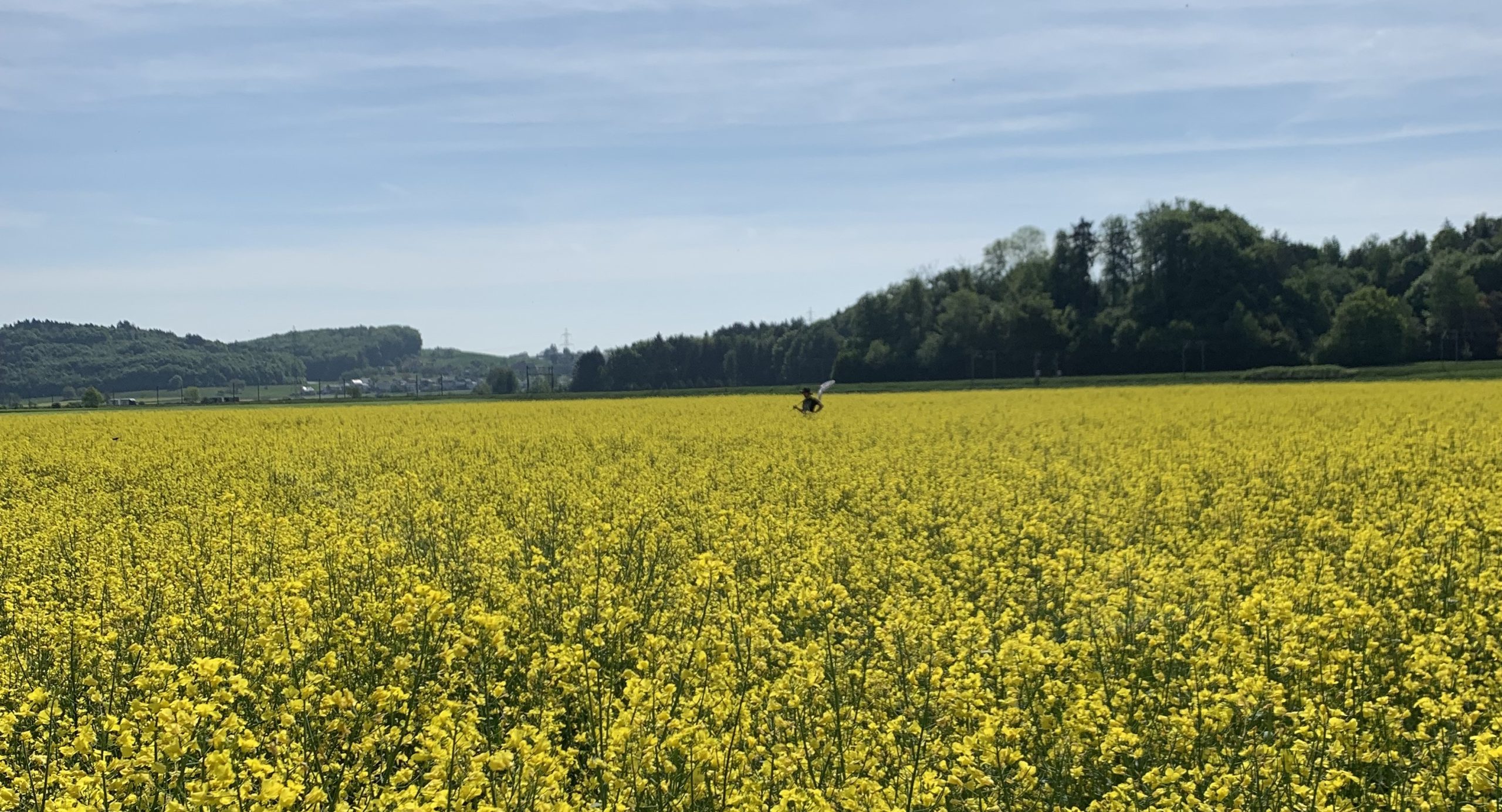
We conducted standardized data collection focusing on biodiversity and agronomic parameters in 22 paired fields in Switzerland. Assessments included spider and wild bee monitoring, vegetation surveys, and yield measurements. In addition, interviews were conducted with three farmers on the co-construction processes with scientists and the implementation of the interventions.
What we found
Biodiversity Benefit. Agroecological fields demonstrated significantly higher biodiversity, particularly in plant species richness and invertebrate populations, compared to conventional fields. Wildflower strips greatly enhanced vegetation diversity, providing favorable conditions for beneficial arthropods such as spiders and bees. However, these biodiversity gains varied depending on crop type and management practices.
Yield Trade-offs. Conventional fields consistently produced higher yields across all crops studied. Protein content was also 8.8% higher, particularly impacting wheat quality. The yield gap was primarily driven by pesticide application in conventional fields, while mechanical interventions in agroecological fields contributed to reduced yields.
Farmer perspectives. Interviews with three farmers indicated that the co-construction process with scientists was perceived positively. The wildflower strip intervention was unanimously seen as beneficial for biodiversity, though its impact on crop yield was not favorable. Undersowing was valued for biodiversity as well, but its yield effects varied depending on the context.
What are the implications
- Biodiversity and Ecosystem Services: Agroecological practices offer significant biodiversity benefits, particularly for spiders and wild bees. However, these biodiversity gains do not always translate into reduced pest pressure or higher yields. Farmers may need additional support, such as financial incentives or technical assistance, to optimize pest control benefits from biodiversity.
- Yield Concerns: The yield gap between conventional and agroecological systems remains a challenge. Farmers transitioning to agroecological methods will need to balance trade-offs between reducing chemical inputs and maintaining crop yield. Agri-environment schemes could help bridge this gap by offering financial compensation or technical assistance to minimize yield loss while promoting biodiversity.
- Policy Implications: Policymakers should promote agroecological practices as part of a broader strategy for sustainable agriculture. Policies must be flexible to account for local conditions and should support farmers with tools to monitor biodiversity and manage pests effectively. Tailored policies will help optimize both biodiversity and yield outcomes.

