
Lessening the impact of crop production intensification on biodiversity in Mediterranean olive groves
The Portuguese EBA
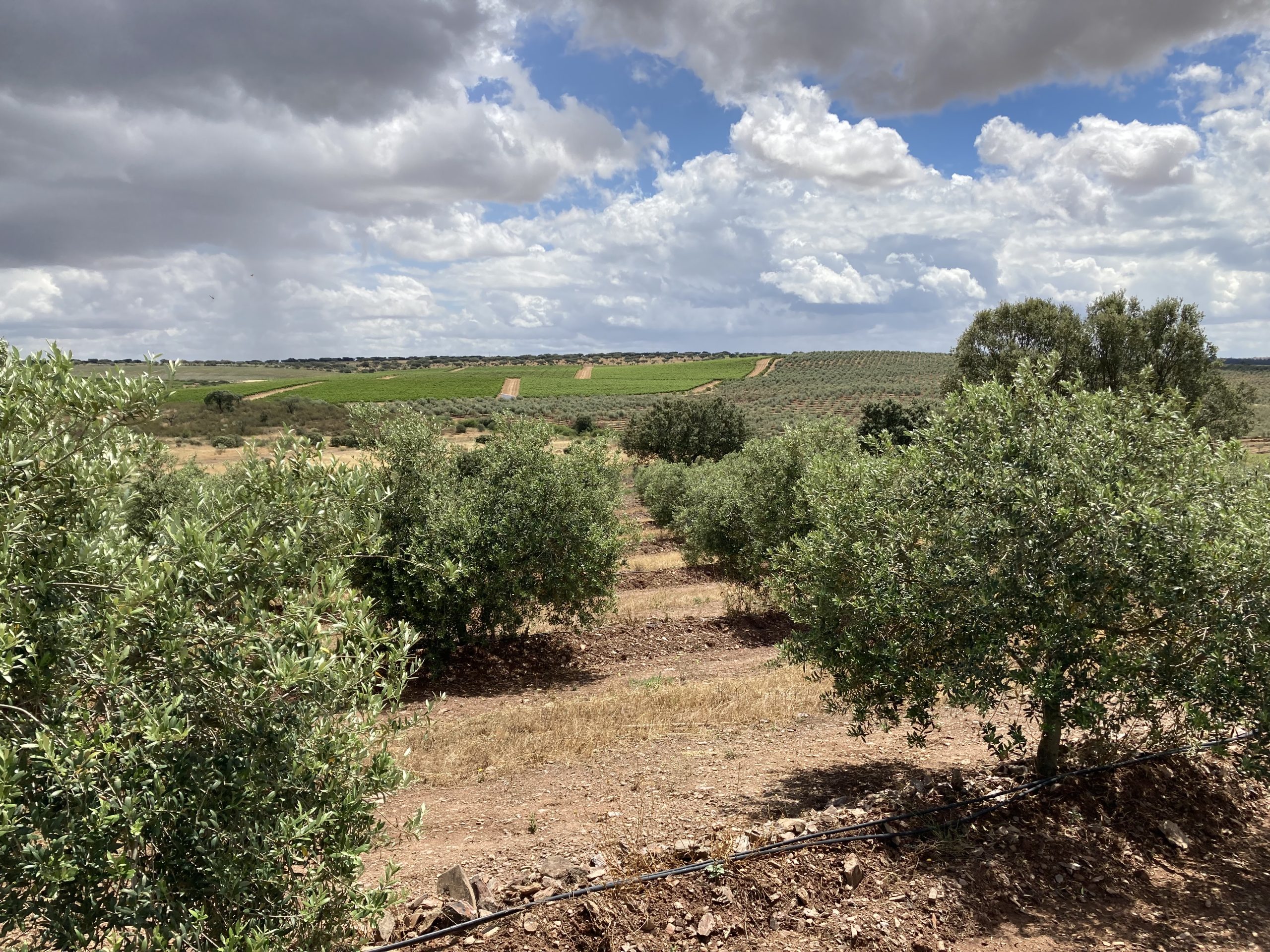
EBAlentejo is located in the region of Alentejo, southern Portugal, which is one of the most important olive growing regions in Europe. The topography is flat, with altitude ranging between 100 and 400 m a.s.l. Natural and semi-natural areas are mostly composed of the characteristic Portuguese ’montado’ – evergreen forests of cork (Quercus suber) and holm oaks (Q. rotundifolia) –, considered a High Nature Value Farming System. To engage olive farmers into our experimental design, we created an experimental biodiversity area (EBA), the so-called EBAlentejo, to increase the cohesion among olive farmers across the study region. Group-meetings with the olive farmers interested to take part of EBAlentejo were run to create an experimental approach co-designed between olive farmers and researchers. Through this dialogue, we successfully designed a sown treatment which substantially enhanced the structure of inter-row vegetation cover and was expected to have strong positive impacts on biodiversity.
Our approach
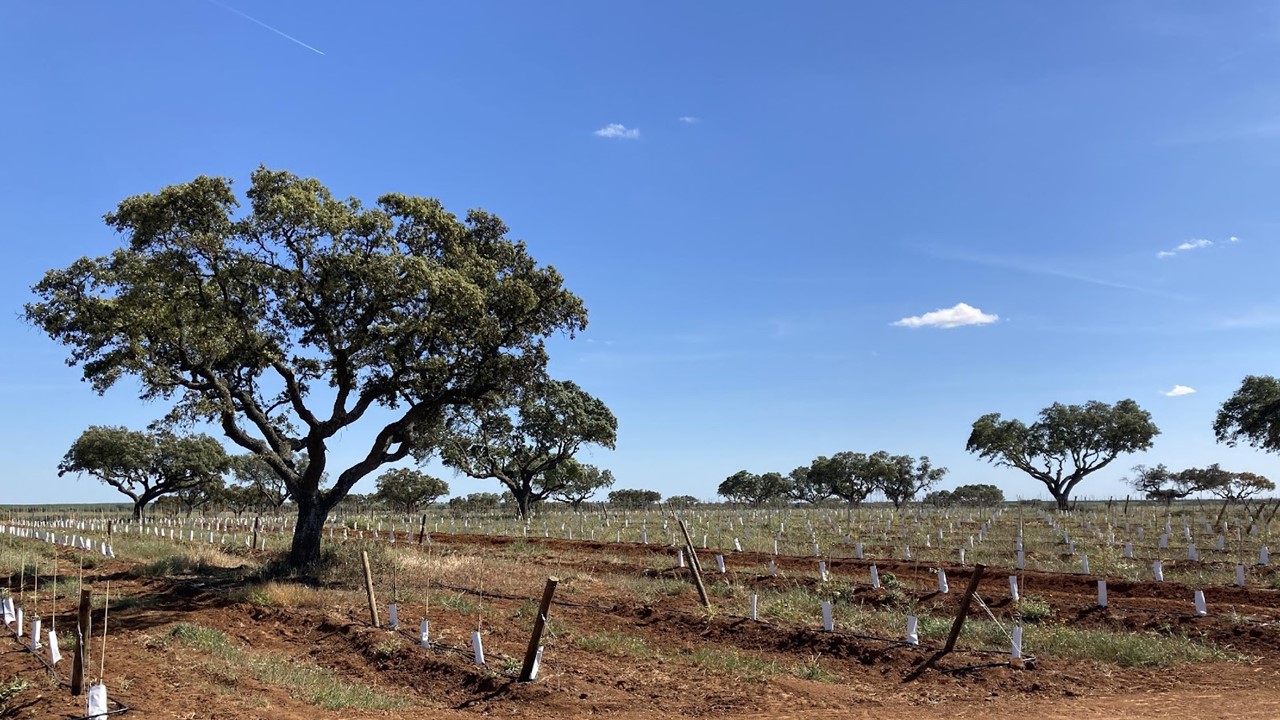
We investigated the effect of inter-row vegetation cover on three target biodiversity groups: bees, spiders and wild plants. In doing so, we sowed inter-row herbaceous vegetation in 10 experimental sites in 2022, and 12 in 2023. We used a paired design, so that each experimental site included two distinct areas: an area in which inter-row herbaceous vegetation was sown, and a control area where no herbaceous vegetation was sown in the inter-row. Both experimental and control areas covered four inter-rows 50 m long and 1.5 m wide in size. Sown vegetation consisted in a mixture of seed plants (i.e., Coriandrium sativum, Brassica napus, Orobrychus vicifolia, Trifolium suaveone, T. presupinatum, Vicia sativa, V. villosa, Lupinus luteus) aimed to increase vegetation and floral resource abundance between olive tree lines. This plant mixture was though to increase the availability of food and shelter resources for target groups like bees and spiders but irrelevant for olive pests like the olive fruit fly a (Bactrocera oleae) and the olive fruit moth (Prays oleae).
What we found
That sown inter-row vegetation covers significantly impacted all three biodiversity groups both study years. Specifically, the increased diversity and biomass of plants in the experimental treatment led to a higher richness and abundance of bees, spiders and plants in both study years. Remarkably, our intervention had no impacts (neither positive nor negative) on pest infestation levels by either B. oleae or P. olae.
What are the implications
Our findings suggest that managing inter-row vegetation cover can be crucial for helping biodiversity conservation in olive farms, including intensively managed ones. Indeed, all farmers who participated in the project and integrated EBAlentejo see this increase in biodiversity as an incentive to conserve and promote inter-row vegetation cover within their farms. This positive view was also influenced by the fact that the intervention had no negative impact on olive pests. Moreover, farmers also showed great interest in the possible effects of the intervention on insectivorous vertebrates, such as birds and bats, which are increasingly recognised as valuable natural pest controllers in Mediterranean olive systems.

