
Reducing the intensity of farming practices have no effects on yields, but positive effects on biodiversity and gross margins
The French EBA
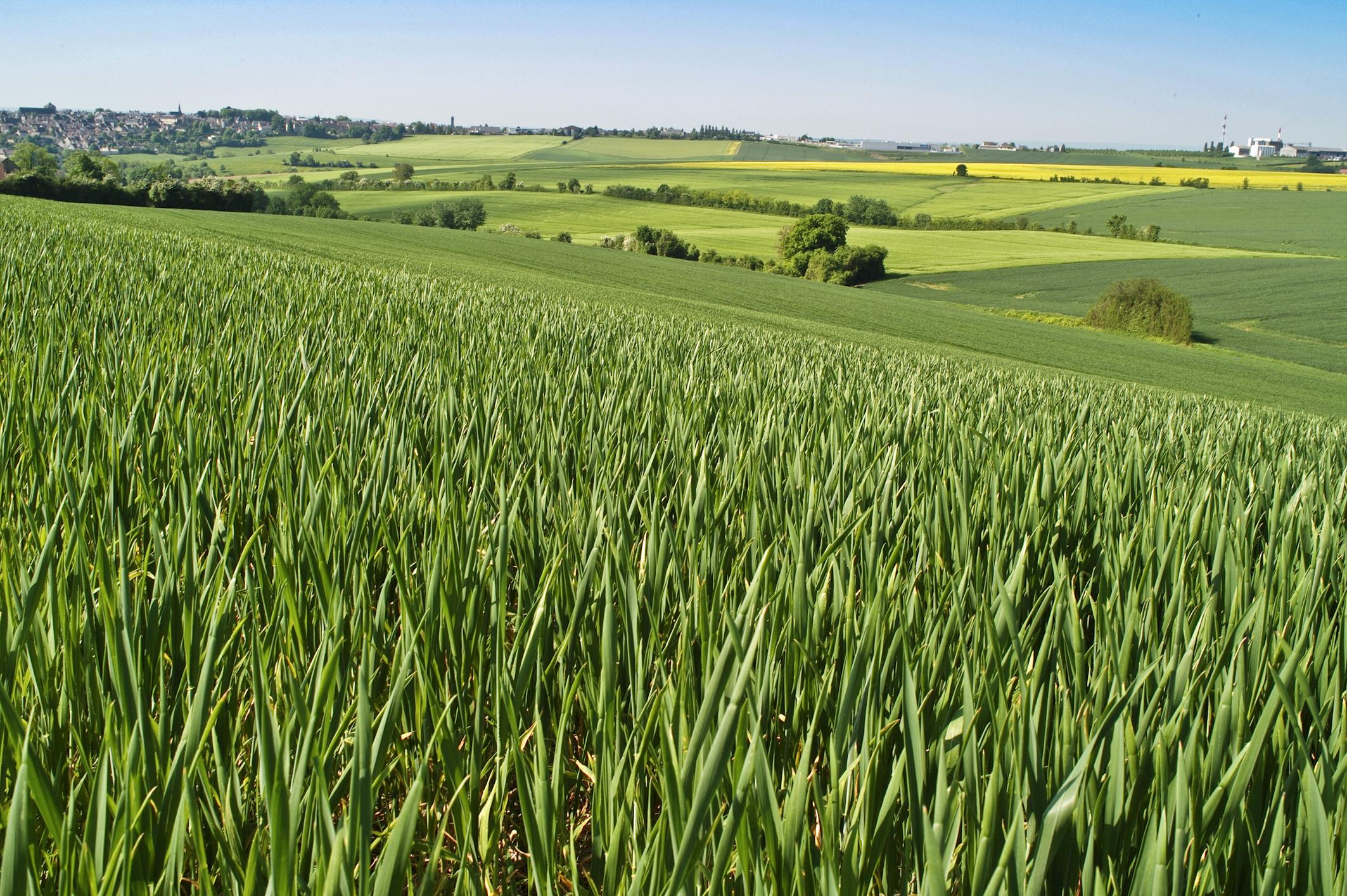
The French EBA is located within the Nouvelle Aquitaine Region, Centre West of France. The site covers around 450 km² with more than 13,000 agricultural fields belonging to almost 450 farms. It is a research platform that belongs to the French Long Term Ecological Research network (part of the European LTER). More than 90% of the area is farmed, shared equally between mixed and pure arable farming, and mixed farms have decreased from 80% in the last 25 years. Of the 450 farms, over 70 are organically farmed, and more than 100 have contracted agri-environmental measures. Half of the study area is a NATURA2000 site.
Our approach
We tested interventions aimed at extensifying (i.e. reducing the intensity of management) crop production in winter wheat, which was achieved through combination of:
- Conventional farming: Reducing nitrogen and pesticide use.
- Organic farming: Reducing tillage from several times per year to no tillage, while at the same time reducing mechanical weeding to once or twice per year.
Contacts were set up with farmers and the intervention was co-designed with these farmers to decide on the area and location of experimental plots, and how a reduction in intensity of management could be achieved. Experimental plots were then compared with a control.
What we found
We detected no significant differences in wheat yield between experimental and control plots in either the conventional farms (average decrease: 4%) or organic farms (average decrease: 8%). Reducing pesticide had no effect on yield, while nitrogen reduction had a marginal effect of 5.8%. Overall, the reduced costs of using less pesticide and nitrogen in conventional farms more than offset any minimal reduction in yield, resulting in improved gross margins by an average of €95/ha. In organic farms, there was no effect on the gross margin.
Considering both years and both farming systems together, we found a moderate positive effect on arable weed diversity and abundance; a positive effect on bee diversity (more pronounced in organic fields); and a very strong positive effect on both spider abundance and diversity in experimental versus control plots.
What are the implications
Farmers were very positive about the findings but still face rising input costs due to geopolitical and market uncertainty. They were looking for solutions to reduce input use, maintain yields, and avoid extra workload. The EBA gave farmers a chance to test their own ideas in collaboration with researchers, using a shared experimental framework. This led to practical evidence that biodiversity and productivity can go hand in hand across various systems. In 2024, some farmers launched their own experiments based on the Showcase approach, exploring other variables such as crop mixtures, and showing willingness to adapt practices to cope with climate and global market changes.

