
Could farming for biodiversity in grasslands pay for itself?
The Dutch EBA
The Dutch EBA is situated in the Geuldal area in the South-East of the Netherlands and covers approximately 70km2. This is a varied landscape with undulating hills, consisting of plateaus with fertile agricultural soils (loess), river gulleys, dry valleys, and chalk-rich sediment surfacing on the slopes. Land use in this area includes intensive conventional arable and dairy farming, organic mixed farming and a significant area of nature reserves. In the Geuldal area, an initiative has started in which farmers, nature conservation organisations, municipalities, the waterboard, the province and scientists work together to improve the whole landscape for biodiversity (www.boshommellandschap-Geuldal.nl). Furthermore, farmers are united in a collective that promotes nature-inclusive farming through agri-environmental schemes. However, the majority of the EBA is farmed intensively, which drives further decline of its rich natural heritage.
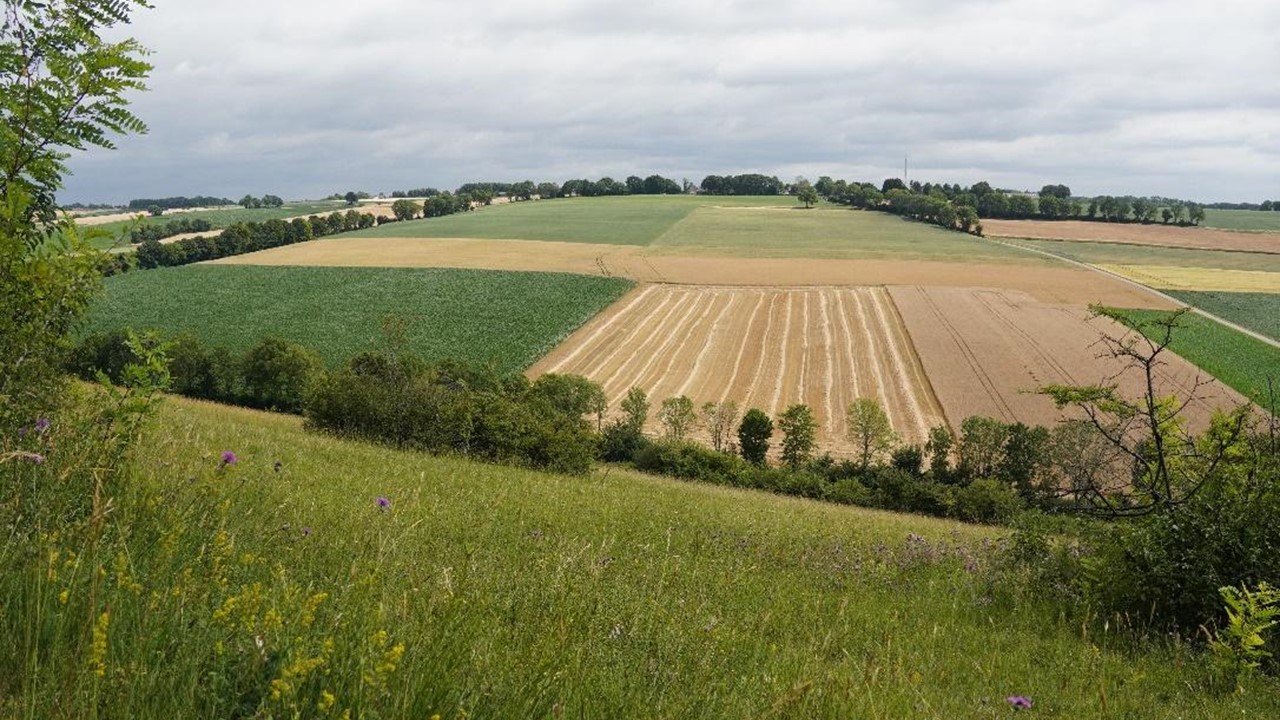
Our approach
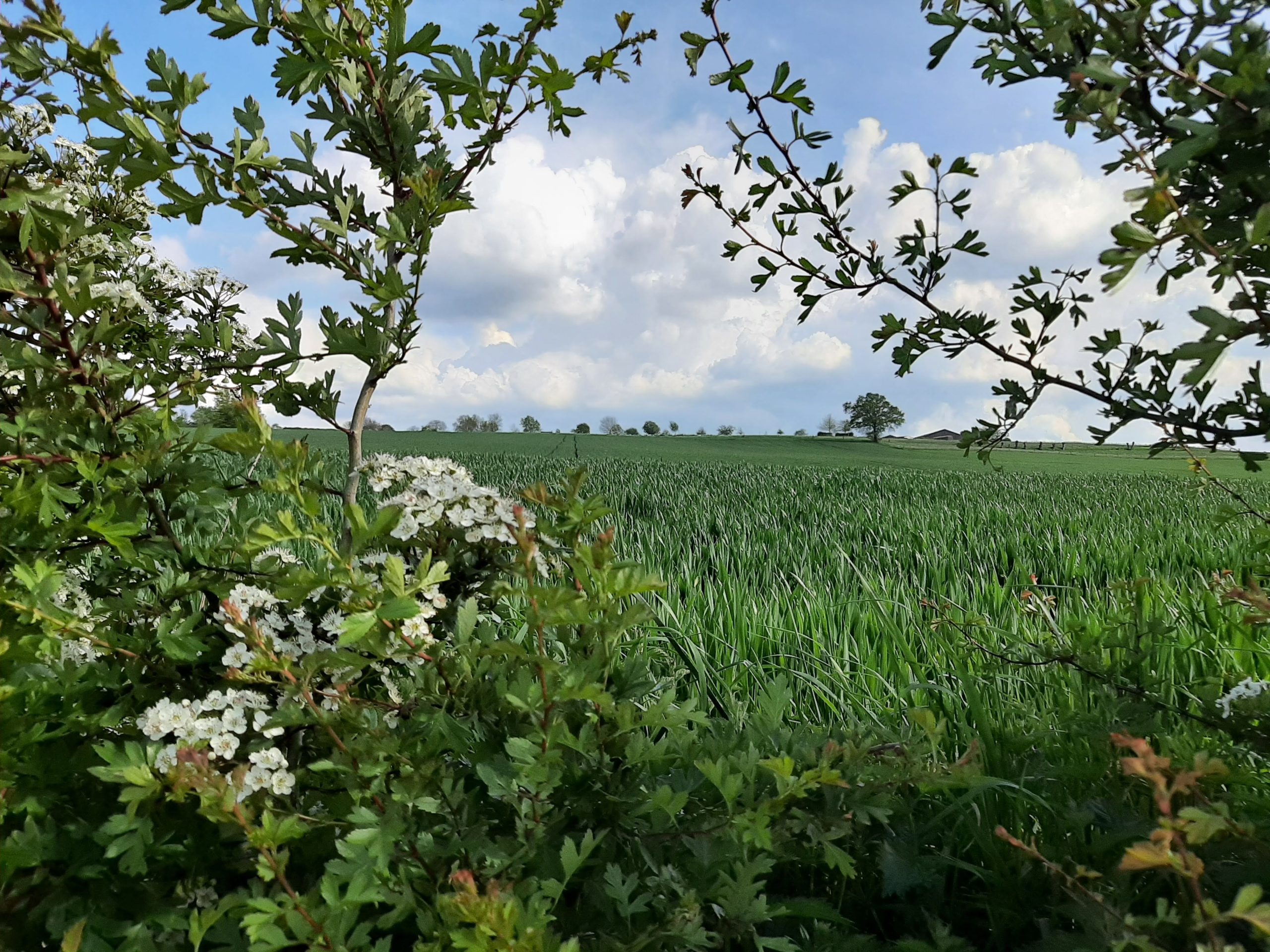
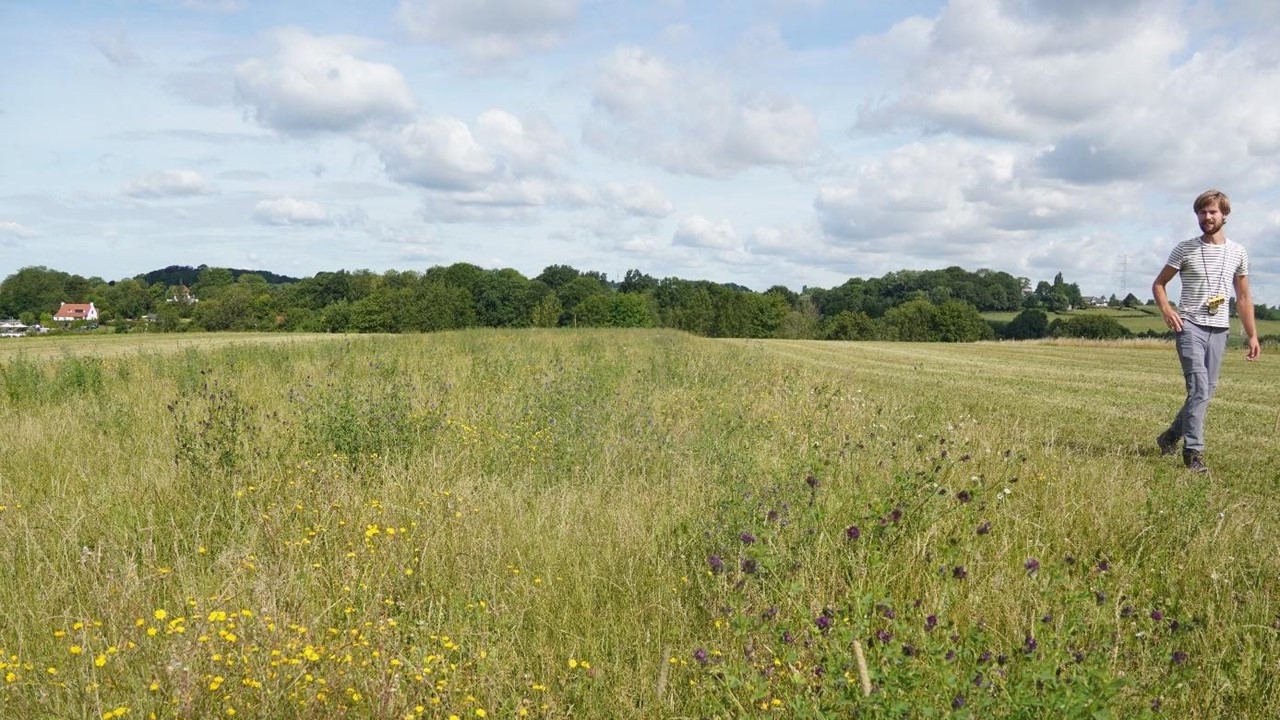
We studied the biodiversity, multiple ecosystem services (e.g. soil health, soil carbon, pollinators) and grassland productivity of 41 grasslands. The sites formed a gradient ranging from semi-natural grasslands with a low management intensity, through to high-intensity production grasslands. Through farmer interviews we collected information on fertilizer inputs, management costs and yield, to estimate farmer income from these grasslands.
What we found
Results show that extensification of management increases the number of plant, bee and earthworm species in grasslands, reduces leaching of phosphate and nitrate to groundwater and results in higher soil carbon. The species richness of the vegetation increases strongly, especially from medium- to low productivity levels. This indicates that low-productivity grasslands dominated by forbs are crucially important for biodiversity. However, after accounting for the effect of fertilizer, higher biodiversity did not result in higher productivity, although higher legume cover (mainly clovers) had a positive effect on grass production. Farmer income was primarily related to farming intensity, with income benefits of increasing intensity levelling off at high fertilization levels.
What are the implications
In agricultural grasslands in the Netherlands, farming more extensively restores the ecological functioning. This improves multiple societal benefits in parallel, but results in a decrease in farmer income. In other words, enhancing biodiversity on farmland does not pay for itself but requires that farmers are financially rewarded for the delivery of these public goods. For example, price premiums, public payment schemes or taxation of negative impacts can make it rewarding for farmers to farm for biodiversity. These rewards should be in line with both the benefits and the long-term income stability that intensive livestock keeping can provide. This could motivate more farmers to play an important role in restoring biodiversity and public goods in agricultural landscapes.

