
Welcome to Living Fields!
Your one-stop resource centre to promote biodiversity on your farm

About our platform
Cultivating a greener future for farmers and the planet
At Living Fields, we are dedicated to helping farmers around Europe to embrace agroecological practices that promote biodiversity while enhancing the productivity and profitability of their farms.
By connecting farmers with the knowledge, tools, and resources they need, we aim to build a global network of growers who adopt responsible farming methods and contribute to a greener, more resilient future for all.
Powered by Showcase
Meet the project behind our initiative
This platform has been developed as part of the SHOWCASE project, which is funded by the European Union’s Horizon H2020 research and innovation programme. This project brings together leading scientists in agroecology and socioeconomics, farmers, citizen science networks, nature conservation NGOs and science communication specialists to integrate biodiversity into farming.
Nature’s bounty
Discover the benefits of integrating ecosystem services and biodiversity in agriculture
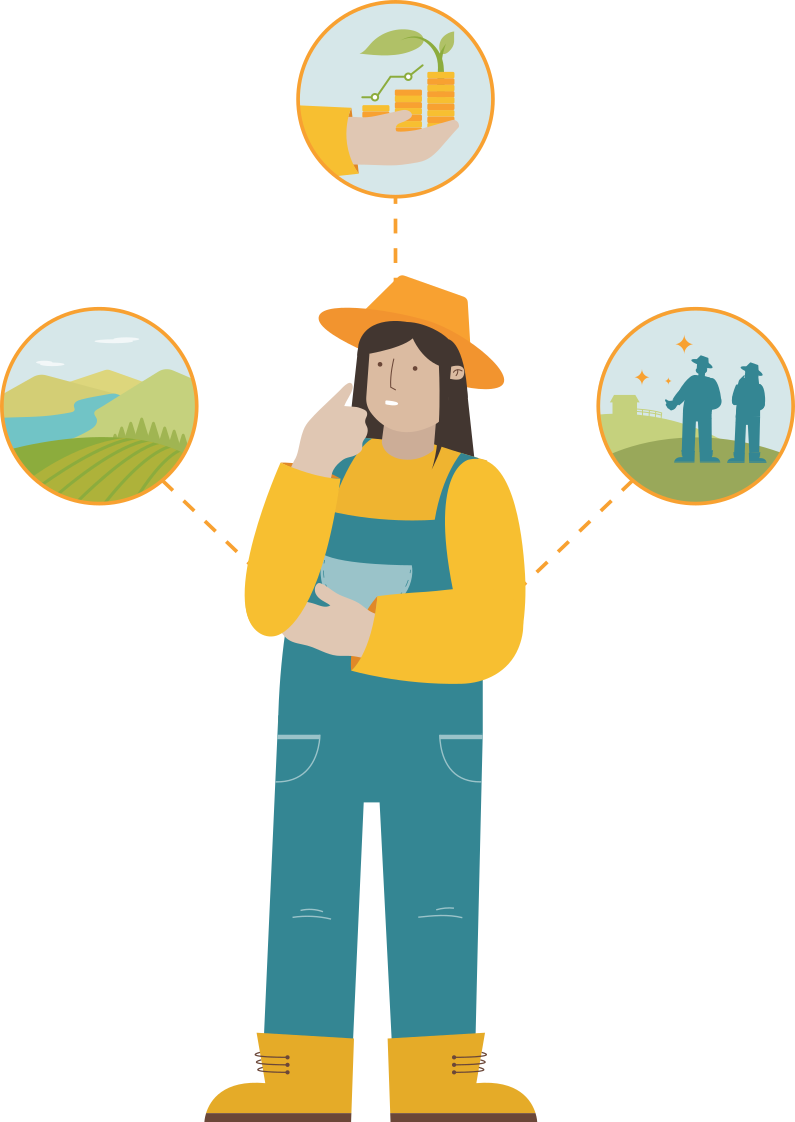
Environmental benefits
Improved soil health
Biodiversity in agricultural landscapes can contribute to better soil structure, nutrient cycling, and water retention, leading to improved soil fertility and long-term productivity.


Pest control
A diverse ecosystem encourages the presence of natural predators, reducing the need for chemical pesticides and lowering the risk of pest resistance.
Climate change mitigation
Biodiverse agricultural landscapes can store more carbon, which reduces greenhouse gas emissions and contributes to climate change reduction.



Pollination
Promoting biodiversity can attract pollinators such as bees and butterflies, enhancing crop yields through better pollination.
Economic benefits
Increased productivity
Biodiverse agricultural practices often lead to increased crop yields and improved quality, boosting farm profitability.


Cost savings
By reducing the need for chemical inputs such as pesticides and synthetic fertilizers, farmers can save on input costs.
Risk management
Diversified farming systems are more resilient to climate change, pests, and diseases, reducing the likelihood of crop failures and ensuring more stable incomes.


Access to niche markets
Biodiverse farming practices can provide unique products that appeal especially to environmentally conscious consumers.
Social benefits
Community well-being
Biodiverse agricultural landscapes can support local communities by providing job opportunities, enhancing food security, and improving overall quality of life.


Cultural and educational value
Biodiverse landscapes can preserve traditional farming practices and knowledge, while also providing opportunities for research and education.
Health benefits
Reducing chemical inputs can lead to fewer health risks for farmworkers and surrounding communities, as well as provide consumers with healthier food options.

Social cohesion
Biodiversity-friendly farming can strengthen collaboration and mutual support within rural communities, fostering collective learning and shared responsibility for local ecosystems.

Environmental benefits
Improved soil health
Biodiversity in agricultural landscapes can contribute to better soil structure, nutrient cycling, and water retention, leading to improved soil fertility and long-term productivity.


Pest control
A diverse ecosystem encourages the presence of natural predators, reducing the need for chemical pesticides and lowering the risk of pest resistance.

Climate change mitigation
Biodiverse agricultural landscapes can store more carbon, reducing greenhouse gas emissions and helping to mitigate climate change.

Pollination
Promoting biodiversity can attract pollinators such as bees and butterflies, enhancing crop yields through better pollination.
Economic benefits
Biodiverse agricultural practices often lead to increased crop yields and improved quality, boosting farm profitability.

Increased productivity

Cost savings
By reducing the need for chemical inputs such as pesticides and synthetic fertilizers, farmers can save on input costs.
Risk management
Diversified farming systems are more resilient to climate change, pests, and diseases, reducing the likelihood of crop failures and ensuring more stable incomes.


Access to niche markets
Biodiverse farming practices can provide unique products that appeal to environmentally conscious consumers.
Social benefits
Community well-being
Biodiverse agricultural landscapes can support local communities by providing job opportunities, enhancing food security, and improving overall quality of life.
Cultural and educational value
Biodiverse landscapes can preserve traditional farming practices and knowledge, while also providing opportunities for research and education.
Health benefits
Reducing chemical inputs can lead to fewer health risks for farmworkers and surrounding communities, as well as providing consumers with healthier food options.

